Description
PLATINUM Series
In the new PLATINUM series, the previous injections were based on sterile USP pharmaceutical grade GSO (grapeseed oil) as one of the drug dissolving agents, but this has been changed to sterile USP highest pharmaceutical grade Miglyol 840, and the blending ratio of the solvents used has also been changed.
Compared to previous products, this new product is very painless (less likely to cause symptoms such as pain or swelling or is easy to use).
Miglyol 840 is a propylene glycol diester of saturated vegetable fatty acids with chain lengths of C8 and C10.
Miglyol 840 is a colorless, transparent liquid that is tasteless and odorless. Miglyol 840 is a very pure oil made from carefully selected raw materials.
In addition, this oil passes very smoothly through thin needles. Therefore, it can be drawn up into a syringe more smoothly than previous GSO products.
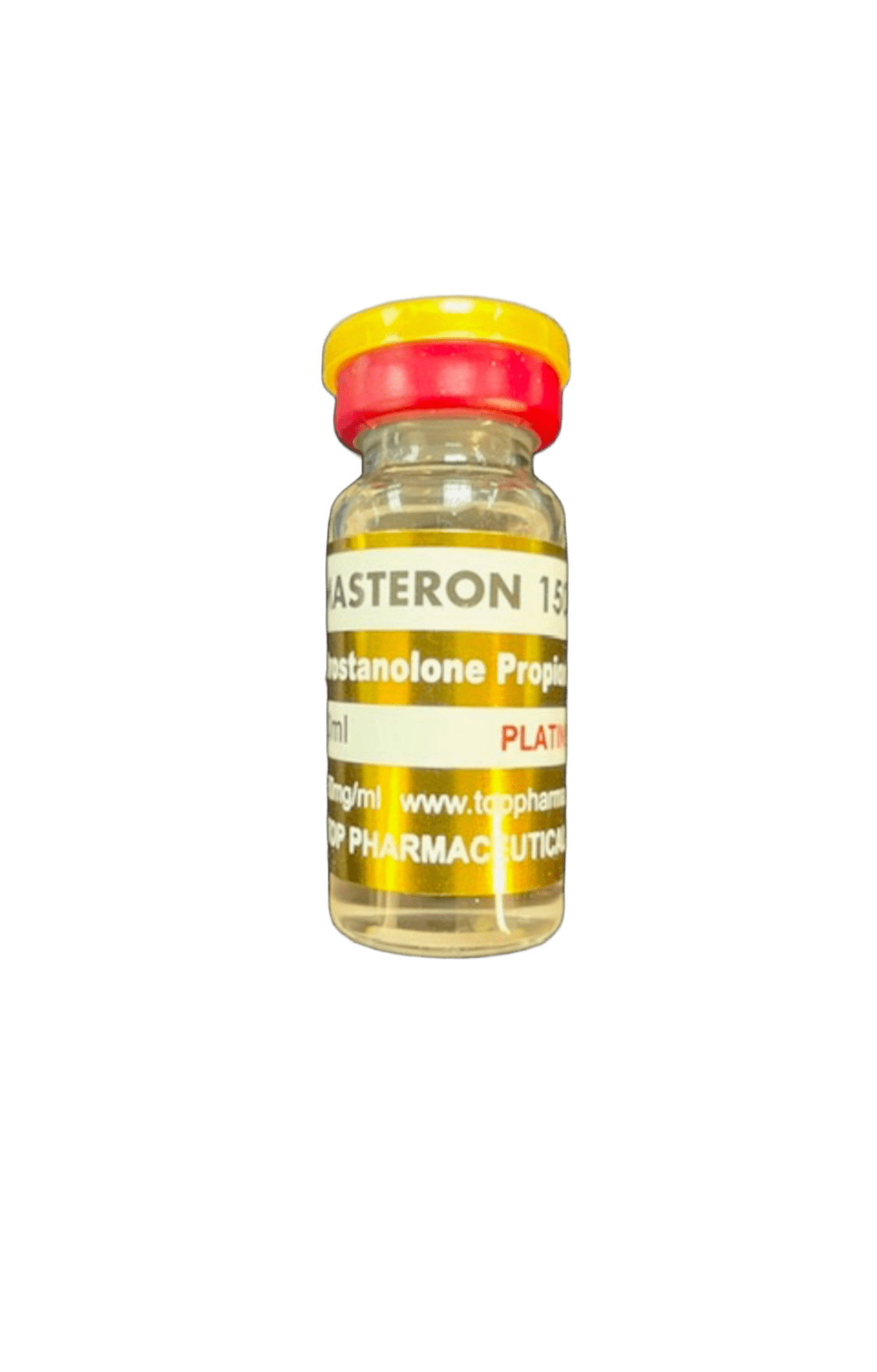
MASTERON 150 (TOP) 150mg x 10ml/vial
Maronstea
Anabolic/Androgenic Ratio: 62/25
Effective dosage (men) 350-500mg/week (100-150mg/once every 2 days)
Effective dosage (women) 25-50mg/once every 2-3 days
Effective period: 2-3 days
Detection period: 3 weeks
Drostanolone propionate is a prodrug of drostanolone.
Like other AAS, drostanolone is an agonist of the androgen receptor (AR). It is not a substrate for 5α-reductase and is a poor substrate for 3α-hydroxysteroid dehydrogenase (3α-HSD), and therefore shows a high ratio of anabolic to androgenic activity.
As a DHT derivative, drostanolone is not a substrate for aromatase and hence cannot be aromatized into estrogenic metabolites.
While no data are available on the progestogenic activity of drostanolone, it is thought to have low or no such activity similarly to other DHT derivatives.
Since the drug is not 17α-alkylated, it is not known to cause hepatotoxicity.
Drostanolone propionate, via its active form drostanolone, interacts with the AR and activates a cascade of genetic changes, including increased protein synthesis (anabolism) and decreased amino acid degradation (catabolism).
It also induces a reduction or inhibition of prolactin or estrogen receptors in the breasts, which is linked to its antitumor effects.